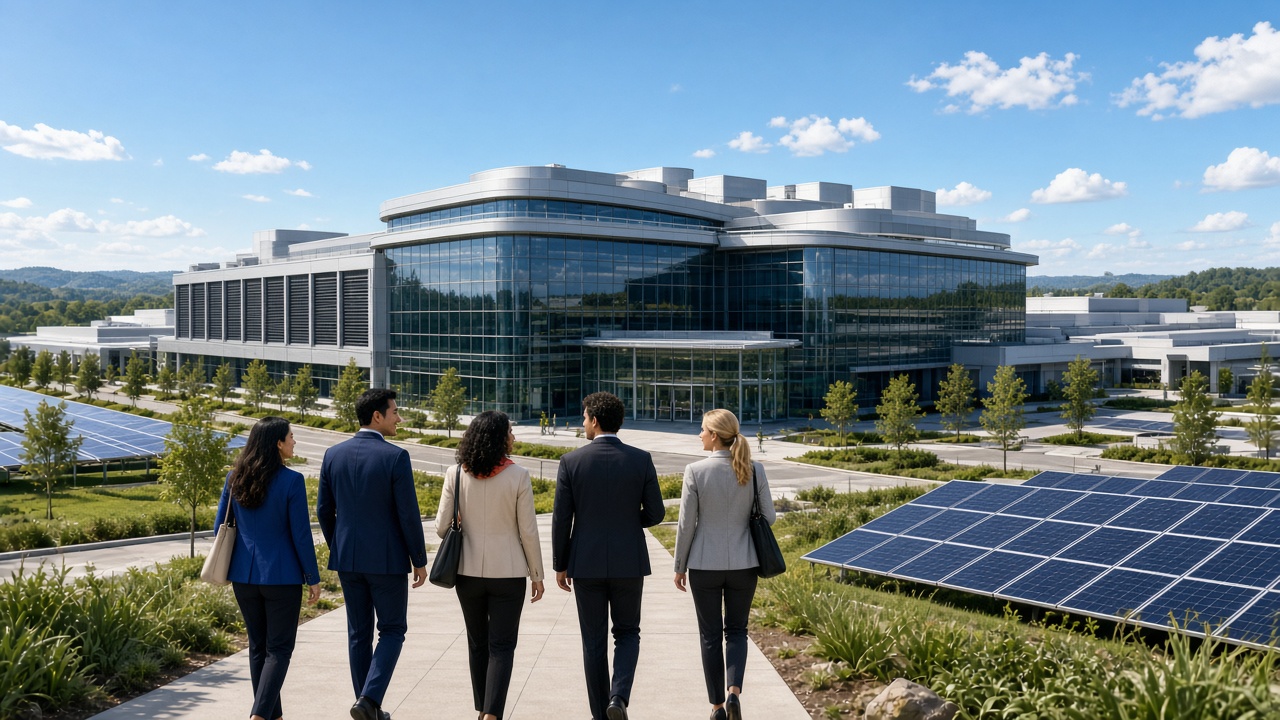
The Physical AI Hiring Wave: Who Is Hiring Robotics Talent Now

Who is hiring robotics and physical AI talent in November 2026: Waymo, Figure, 1X, Generalist AI, what the roles pay and how software people can move in.
I've been watching AI hiring data every week for months, and something shifted this November. The loudest growth isn't only in chatbots and coding agents anymore. It's in robots: humanoids, robot foundation models, autonomous vehicles and the factories and fleets behind them. Physical AI has gone from a research curiosity to a serious hiring market, and the numbers now back that up.
So let's look at the data from the week to 10 November 2026. Who is hiring, what roles they want, what they pay, which skills keep showing up, and, most importantly, how a software or automation person like you can actually move into this world.
The headline numbers this week
The AI Hiring Index weekly report for the seven days to 10 November counted 904 new roles across 273 AI companies, down just 2% on the week before. Python was the most named skill in open job descriptions (27.7%), followed by LLMs (15.3%) and agents (14.6%). Then comes the one that caught my eye: Robotics, named in 11.0% of open descriptions, ahead of AWS (10.5%) and Kubernetes (9.6%).
At companies that are mostly known for software and models, more than one job description in ten now mentions robots. The Index's own robotics skill page puts it at 1,672 of 15,238 open descriptions, spread across 68 companies. Engineering leads with 656 of those roles, but there are 392 in infrastructure, 255 in operations and 148 in research. This is a whole-company hiring story, not just a PhD story.
The standout accelerator was Generalist AI, which posted 21 new roles in seven days against an average of about 0.5 a week before, taking it to 39 open roles. That's a forty-fold jump in pace. It makes sense when you look at the company's year. In August it published GEN-1.5, a robot foundation model it describes as able to learn a new task "in seconds, from a single example, without gradient updates or fine-tuning". A week later TechCrunch reported, citing sources, that Generalist had reached a $3 billion valuation, with its Series B extended to a total of $600 million. Funding like that turns into job ads fast, and that's exactly what we're seeing.
Who's hiring robotics talent right now
For a cleaner view of the biggest physical-AI employers, I like the Prof H Lab AI Jobs Tracker. It reads each company's own job-board feed every morning rather than estimating. Its 10 November reading:
| Company | Segment | Open roles | Median US pay band printed |
|---|---|---|---|
| Waymo | Autonomous driving | 378 | $213K–$263K |
| Figure AI | Humanoid robots | 103 | $150K–$250K |
| 1X | Humanoid robots | 99 | $175K–$224K |
| Nuro | Autonomous driving | 95 | too few printed |
| Apptronik | Humanoid robots | 89 | $242K–$275K |
| Agility Robotics | Humanoid robots | 77 | $148K–$220K |
| Physical Intelligence | Robot foundation models | 46 | none printed |
Source: Prof H Lab AI Jobs Tracker, reading of 10 November 2026. Pay is the median of the low and high ends of each company's printed US ranges, base salary only.
That's more than 880 open roles at just those seven companies. Waymo alone has more openings than many entire AI labs. And the robotics share inside these companies is huge. On the AI Hiring Index robotics page, robotics appears in 93% of 1X's open roles, 84% of Apptronik's, 83% of Agility Robotics' and 88% of Path Robotics', with Genesis AI, Waabi, Motional and Wayve all above half.
The money behind them is real, too. Apollo Technical's Robotics Engineering Report 2026 quotes Crunchbase figures showing $9.9 billion of global robotics venture funding in the third quarter of 2026, excluding defence, more than double the $4.3 billion of a year earlier. The same report lists some of 2026's biggest rounds: Skild AI raising $1.4 billion in January, Apptronik a $520 million Series A extension in February (taking that round past $935 million), and Mind Robotics a $500 million Series A in March. As Apollo puts it, most of a robotics startup's spending is engineering payroll, so a funded round turns into open roles within a quarter or two.
What the roles actually are
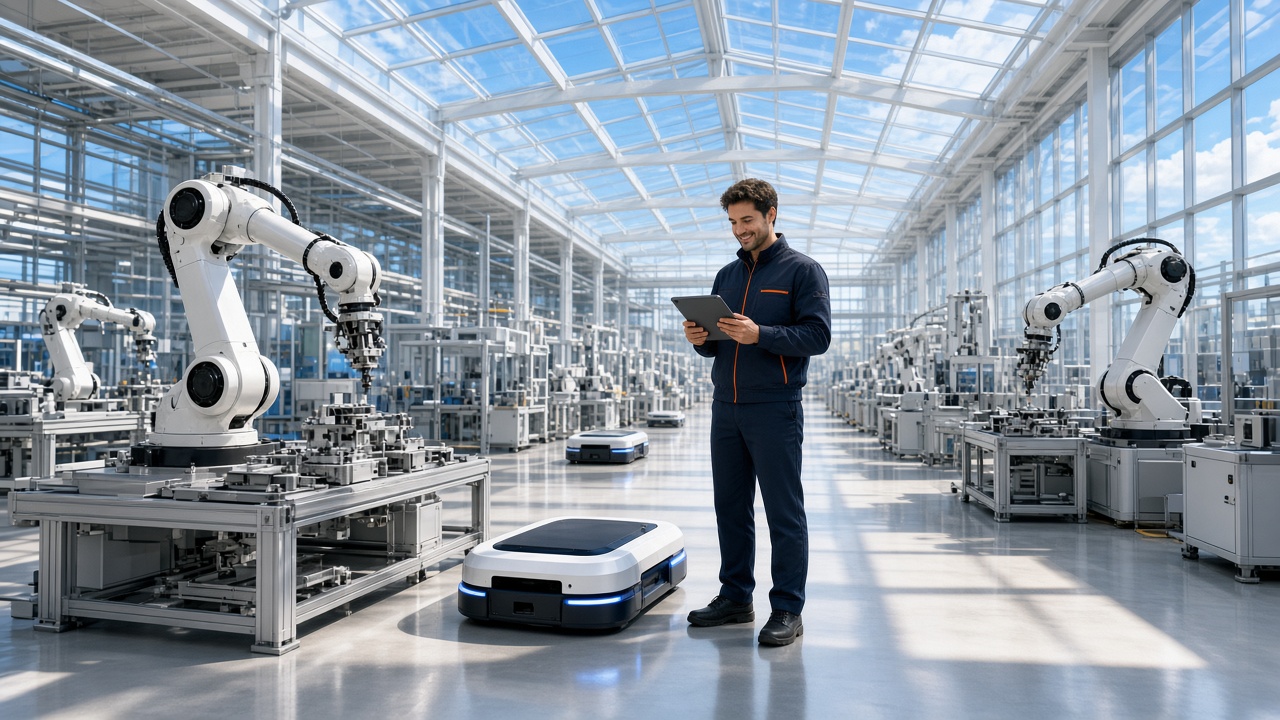
When people hear "robotics job" they picture someone with a soldering iron. Some of these jobs are exactly that, and they're brilliant jobs. But the open roles I'm reading this week cover a much wider spread:
- Robotics software and autonomy. Writing the code that lets a robot sense, decide and move. Robotics Connected counted 1,577 open robotics software engineer roles at 312 employers on 10 November, and describes a typical week as writing C++, Python or Rust, building simulation and log-replay tools, and chasing bugs that only appear on the real robot.
- Controls. Turning a model's intentions into smooth, safe movement. Generalist AI's Software Engineer: Robotics Controls role, posted on 5 November in Boston, asks for rigid-body kinematics, production Python and C++, and middleware such as ROS or ROS 2.
- Robot learning and simulation. Training policies with imitation learning, reinforcement learning or vision-language-action models, and getting them to transfer from simulation to hardware.
- Data, fleet and infrastructure. Pipelines for robot data, fleet management and the cloud behind it. Physical Intelligence was advertising a Fleet Inventory Specialist the day I checked the AI Hiring Index.
- Technicians and operations. Building, testing and servicing the machines. The Prof H Lab tracker counted 177 entry-level US titles across its employers, including robot service technicians at Figure AI and 1X, and an Engineering Support Technician at Agility Robotics in Fremont printing $74,000 to $95,000.
What it pays
Apollo Technical's report pulled posted base pay from 2,343 robotics engineering postings, and found a median of $193,000, with the middle half running from $160,000 to $225,000. By type of work:
| Type of work | 25th percentile | Median | 75th percentile |
|---|---|---|---|
| AI, machine learning and perception | $196,000 | $223,000 | $255,000 |
| Software, autonomy and simulation | $160,000 | $198,000 | $232,000 |
| Embedded and firmware | $169,000 | $198,000 | $218,000 |
| Controls, motion and robotics systems | $150,000 | $188,000 | $215,000 |
| Manufacturing, test and quality | $140,000 | $165,000 | $192,000 |
Source: Apollo Technical Robotics Engineering Report 2026, open roles counted 8 November 2026. Base pay only.
Seniority matters a lot. Apollo puts the median for new-grad and entry-level titles at $116,000, mid-level at $169,000, senior and lead at $197,000, and staff, principal and architect roles at $235,000. And remember that equity at venture-backed robotics companies comes on top.
A real example helps ground those medians. The Allen Institute for AI's Research Engineer, Robotics role in Seattle, which owns the control stack on arms, hands and humanoids, posts a base range of $128,880 to $193,320 plus bonus.
The skills that keep coming up
Across 2,934 robotics engineering job descriptions, Apollo found Python in 50%, C++ in 37% and Linux in 19%. After that come mechanical CAD (13%), ROS or ROS 2 (10%), SLAM and state estimation (10%), PyTorch (9%), reinforcement or imitation learning and VLA models (7%), and simulation tools such as Isaac, MuJoCo, Gazebo and Drake (3%).
ROS specifically is a nice niche. JobLens counted 360 US postings naming it, with a median advertised salary of $173,000 across 198 postings with pay, and 19% of those that stated a work model offering remote.
My read: Python is the front door. If you already write good Python, you're closer to this world than you think. C++ is the next most valuable skill, and ROS 2 plus one simulator is the signal that proves you can work with robots rather than just about them.
How software and automation people can move in
This is where I get genuinely excited, because the path in is clearer than it's ever been.
Lean on what you already have. Apollo makes the point well: Python and C++ show up in most robotics postings, and people from automotive, aerospace, semiconductors and industrial automation often already have them without the word "robotics" on their CV. If you've built automation pipelines, data platforms or CI systems, robotics companies need those exact skills for fleets, simulation and testing.
Build one real robot project. Robotics Connected's advice is to build something with ROS 2 and a simulator first. I'd go one step further: get a cheap arm or mobile base, or work fully in simulation, and ship a pick-and-place or navigation demo end to end. Record a video. Write up what broke on the "real" version that worked in simulation. That story is gold in an interview.
Use AI tools as your co-pilot. Assistants such as Grok Bot, Claude, ChatGPT or Gemini are great for explaining kinematics, debugging ROS launch files or scaffolding a simulation script. Use whichever suits you, but understand every line you ship to hardware.
Look beyond the Bay Area, and look at the junior end. San Francisco still dominates, with 53% of the US roles on the Prof H Lab tracker, but Austin (Apptronik), Boston (Generalist AI) and Columbus (Path Robotics) are all hiring. Internships and technician roles are real doors in, and many technician postings ask for experience rather than a degree.
We've got robotics and physical-AI roles live on AutomationRoles.ai right now, including machine learning roles at Path Robotics in Columbus, a Machine Learning Engineer Intern role at RoboForce in Milpitas, and a Technical Program Manager for a robotics AI data platform in Santa Clara. Browse them on our jobs board.
The bottom line
Physical AI is where software meets the real world, and it's hiring hard. Robotics shows up in 11% of open AI job descriptions, the biggest humanoid and autonomy companies have hundreds of open roles each, and median robotics engineering pay sits around $193,000 before equity. Generalist AI's jump to 21 new roles in one week shows how quickly a funded team can scale.
If you can write solid Python, think in systems and enjoy seeing your code move something physical, this is one of the most exciting places to build a career heading into 2027. The robots are coming out of the lab. They need people.
Sources
- AI Hiring Index: Weekly report, 7 days to 10 November 2026 and Robotics skill page
- Prof H Lab: The AI Jobs Tracker (reading of 10 November 2026)
- Apollo Technical: Robotics Engineering Report 2026 (published 1 November, roles counted 8 November 2026)
- Robotics Connected: Robotics software engineer career guide (updated 10 November 2026)
- JobLens: ROS jobs, demand and pay (data as of 8 November 2026)
- Generalist: GEN-1.5 (19 August 2026); TechCrunch: Generalist reaches $3B valuation (25 August 2026)
- Generalist AI via Physical AI Jobs: Software Engineer: Robotics Controls (posted 5 November 2026)
- Allen Institute for AI: Research Engineer, Robotics